
Simpson Mix-Muller® Batch Mixer
Mix-Muller for Process Applications
While conventional mixing is usually adequate for the blending of easy-to-handle solids, more intensive forms of mixing can produce total uniformity in a mix of materials having disproportionate mass, particle size, liquidity, viscosity or density. Simpson is here to assist you in reviewing wetted solids mixing options.
The SIMPSON MIX-MULLER® has been successfully applied to a very large number of applications in the processing industries including lead acid battery paste, animal feed, architectural stone, catalysts, ceramics/pottery, colored pigments, explosives/pyrotechnics, fertilizers, molecular sieves, mineral ores, pharmaceuticals, pigments, powdered metals, refractories, and welding rod flux.
With thousands of installations across the globe, Simpson has brought confidence, reliability, and increased productivity to several manufacturing sectors.
Let’s Build the Right Solution for Your Foundry
Versatility Makes You More Competitive
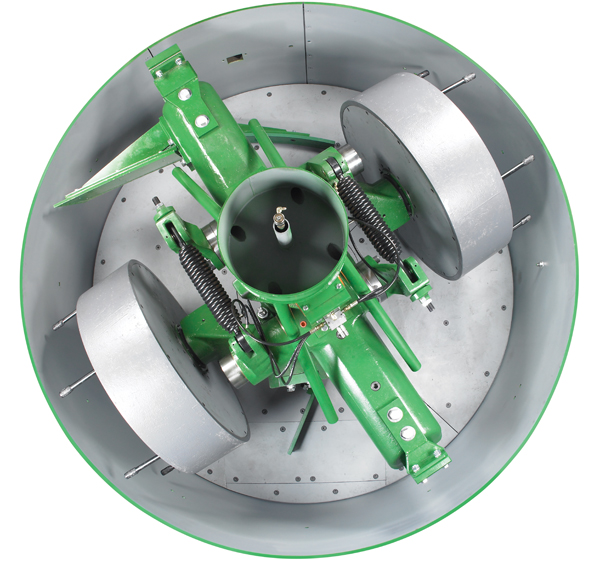
Designed to utilize a range of batch sizes and longer cycle times to provide better consistency and control. Longer cycle times provide for better control. Adaptive tooling provides for flexibility to adjust to variations in batch composition and property development.
Adaptive Tooling
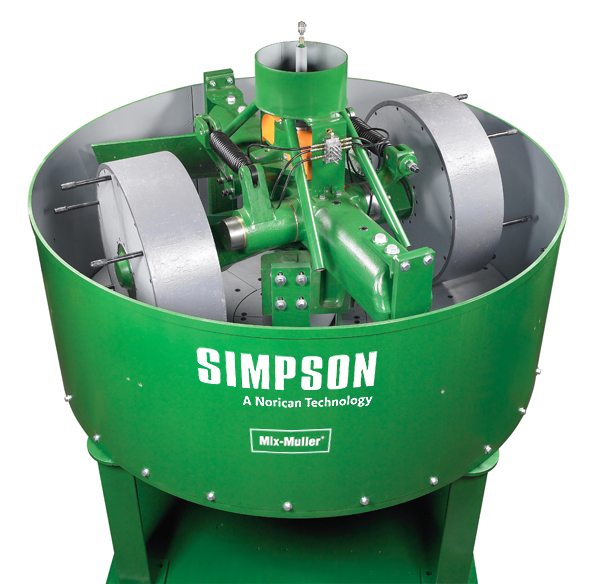
Muller wheels are mounted on independent, spring-loaded suspensions. As the mixture increases in volume and strength, the mullers react by raising and increasing the mulling pressure. This is a versatile and inexpensive source of mixing energy which provides the kneading and compression action of mulling.
Wide-faced mullers provide compression and shear. The muller wheels are set slightly off their true radius so that as they revolve, they skid to provide a shearing action. The inside edges of the wheels travel a shorter path than the outside of the wheels which causes a spatulating action across the face of the wheels.
Interchangeable, modular plows armored with tungsten carbide provide intensive blending and minimize maintenance costs.
Mixing vs Mulling
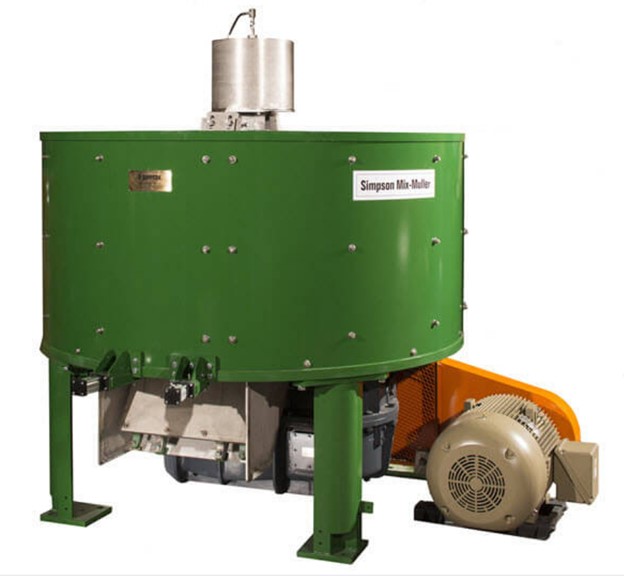
A concise definition of mulling would read “an intensive and controlled mixing process.” Mulling action is a combination of controlled pressure and agitation, to achieve a high degree of uniformity in the preparation of two or more dry/solid or wetted/solid materials rather than agitation alone.
Mixing
A mixer for combining solid materials usually operates with a stirring or beating action effected by blades, paddles, arms, or flighting. The normal action of this type of mixer though adequate for simple blending tasks, is not suitable where tempering action, strict uniformity or the intimate blending of a relatively small amount of material into a large mass, is desirable.
Mulling
The muller is used where materials of disproportionate mass, density, viscosity or particle size must be evenly dispersed to form a homogenous mass… without segregation/or where a small amount of one or more materials must coats each grain of a larger mass.
Customized Solutions
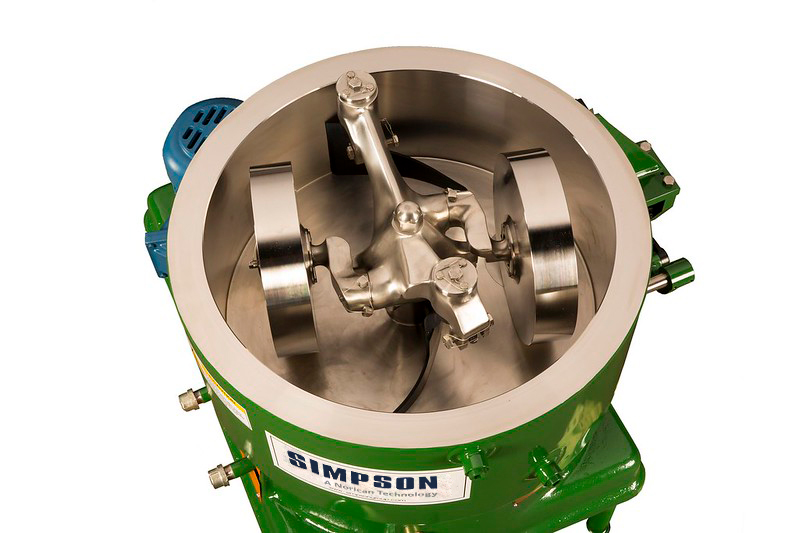
With the range of applications, there are a range of modifications for the Mix-Muller.
Here are a few:
- Standard Steel or Stainless Steel
- Liquid Additions
- Cooling/Heating Jackets
- Dusthood
- Wheel Scrapers/Crib Scrapers
- Increased Motor Sizing
- Special Design for Pyrotechnic Applications
Energy Efficiency
Utilizing 3 Forms of Energy:
- Electric by Motor
- Mechanical by Loading Spring
- Gravitational by Weight of Wheel
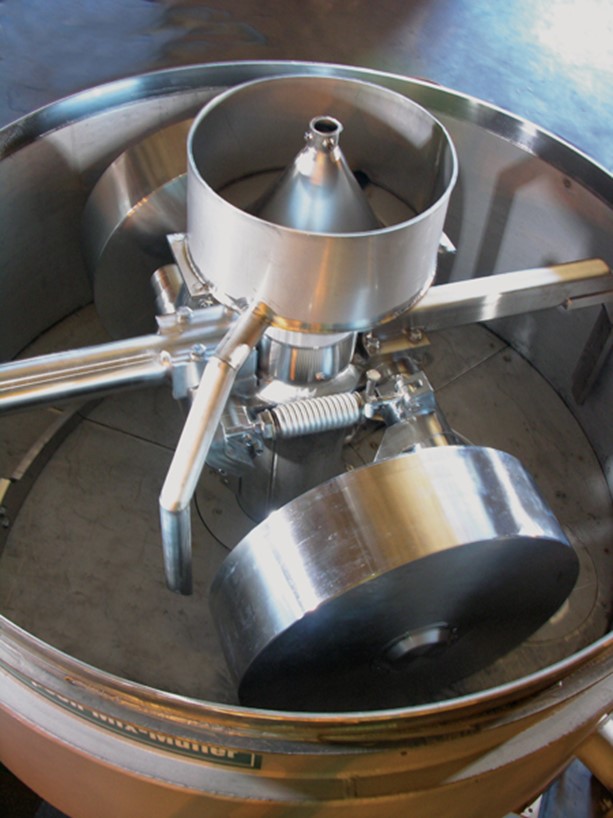
The Mix Muller and Multi-Mull operate on the same principles.

Related content